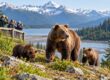
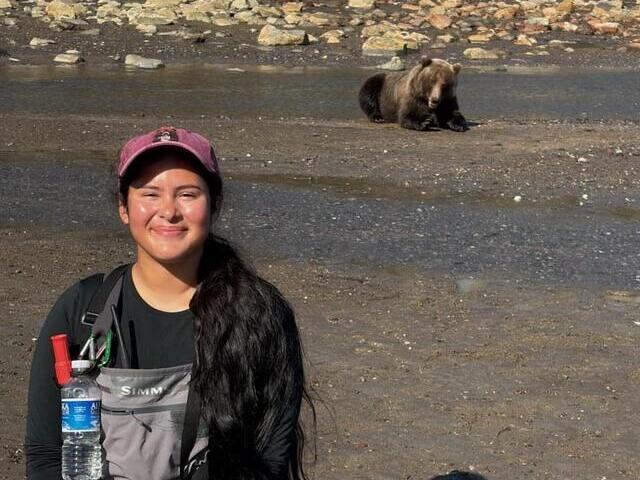
Finding wild bears in Alaska is not simply a matter of walking until one appears.
Experienced guides often begin with something more subtle: reading the landscape.
They look at food sources, tides, tracks, travel routes, weather, and recent bear activity. Just as importantly, they know when not to move closer.
That balance between locating bears and allowing them to behave naturally is a major part of responsible Bear Viewing tours Alaska.
Guides Start by Looking for Habitat, Not Bears
Depending on the area and time of year, that may mean looking toward:
- sedge meadows
- tidal flats
- salmon streams
- beaches
- berry-producing areas
- established bear travel corridors
The Alaska Department of Fish and Game explains that coastal brown bears use a range of seasonal food sources, including vegetation, shellfish, berries, and salmon.
Understanding the connection between food and bear movement can make sightings more predictable without requiring guides to pursue animals. Our guide to what bears eat and how salmon runs affect bear viewing in Alaska explains that relationship in more detail.
Tracks and Signs Can Tell a Story
Fresh footprints, trails through vegetation, feeding signs, disturbed ground, scat, or recently used travel routes can suggest that a bear has been in an area.
Those signs do not mean a guide should follow directly behind the animal.
Instead, experienced guides can use them to understand how bears are moving through the habitat and choose an appropriate observation point.
Local Knowledge Matters More Than Chasing Sightings
A place that was active yesterday may be quiet today because tides, salmon availability, weather, or other bears have changed the situation.
Guides who spend repeated seasons in the same area often develop a strong understanding of where bears tend to feed, rest, cross beaches, or enter streams.
Some individual bears may also return to familiar areas year after year.
You can read more about that behavior in Do Bears Recognize the Same Viewing Areas Every Year?.
That knowledge allows guides to anticipate movement instead of constantly following wildlife around.
Why Staying Put Can Work Better Than Moving Closer
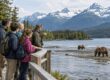
Sometimes the best strategy is to select a suitable viewing location and allow the bear to move naturally through the area.
The National Park Service’s Lake Clark bear-viewing guidance encourages visitors to use established viewing locations and behave predictably around bears. This can help reduce disturbance and allow animals to continue moving and feeding naturally.
At Chinitna Bay, designated viewing areas help manage human activity around important coastal brown bear habitat.
That makes patience an important part of Chinitna Bay Bear Tours Alaska, rather than trying to shorten the distance every time a bear appears.
Guides Watch the Bear's Reaction, Too
Guides also watch how the animal responds to the group.
Changes in direction, repeated attention toward people, altered feeding behavior, agitation, or other signs of disturbance may indicate that additional space is needed.
The Alaska Department of Fish and Game’s wildlife-viewing ethics guidance advises viewers to avoid crowding wildlife, recognize signs of stress, and give animals room to move away.
This is also why responsible viewing practices matter even when Alaskan brown bears Alaska appear calm.
For additional preparation, see Respectful Wildlife Viewing in Alaska: Do’s and Don’ts.
Predictability Is Better Than Sneaking Up on a Bear
In established viewing areas, trying to sneak through vegetation toward a bear can increase the possibility of a surprise encounter.
Responsible guides generally aim to make the group’s behavior controlled and predictable rather than attempting to approach unnoticed.
That principle helps protect both wildlife and visitors.
Some Areas Have Specific Legal Restrictions
Visitors must follow the rules established for the particular park, refuge, sanctuary, or viewing area.
For example, National Park Service rules for commercial activity at Chinitna Bay use designated viewing sites and established access routes, while some high-use bear habitat is subject to seasonal restrictions.
Similarly, Pack Creek is managed through a permit system during its regulated viewing season to reduce pressure on the area and support responsible bear viewing.
Travelers considering a guided experience can also read Why Guided Bear Viewing Tours in Alaska Offer Better Wildlife Experiences.
Good Bear Finding Should Look Uneventful
Guides use experience, recent activity, habitat knowledge, food availability, tides, tracks, and careful observation to put guests in locations where natural bear movement can create the viewing opportunity.
When that approach works well, the bears continue feeding, traveling, resting, or interacting largely on their own terms.
That is the real goal: not simply finding a bear, but seeing Grizzly bears Alaska and coastal brown bears behaving naturally without unnecessarily changing what they were already doing.
If you are planning a guided Alaska bear viewing experience and want to understand the available trip options, get in touch to learn more about responsible wildlife viewing in remote bear country.