Chinitna Bay and Silver Salmon Creek both sit along the Cook Inlet coast of Lake Clark National Park and Preserve, and both offer opportunities to observe wild coastal brown bears.
That does not mean the experiences feel identical.
The biggest differences involve the landscape, how visitors move through each area, the food bears are using, and where viewing takes place. For travelers comparing bear viewing trips Alaska, understanding those details can help set realistic expectations before the day begins.
Chinitna Bay Feels Centered Around a Broad Coastal Estuary
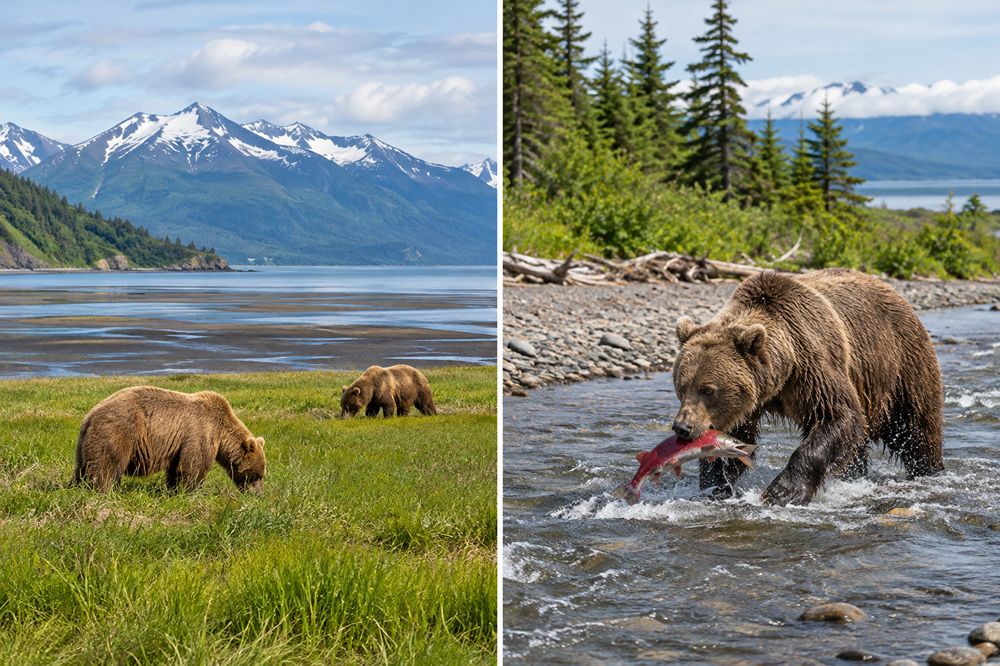
According to the National Park Service’s Chinitna Bay visitor information, coastal brown bears gather in its estuaries because food is available across much of the season. In late spring and early summer, bears commonly graze on protein-rich sedges. They may also dig for clams on the tidal flats, while some shift toward salmon later in the season.
At times, the NPS says visitors may see 20 or more brown bears from a single location.
For more background on the wider region, readers can explore Lake Clark National Park: Your Next Destination for Bear Viewing.
Silver Salmon Creek Has a Stronger Creek-and-Meadow Feel
Here, visitors may move between beach, salt-marsh, sedge-meadow, and creek environments while looking for bears. Most independent visitors travel between viewing areas on foot, and the National Park Service notes that walking two or more miles between sites may sometimes be necessary.
The creek becomes particularly distinctive later in the bear viewing season Alaska when salmon enter the system.
Early in the season, bears may graze in the sedge meadows. Later, visitors can sometimes watch them fishing in the creek, while bears may also dig for clams along the beach throughout the season.
That creates a viewing experience where the setting can change considerably during the same visit.
Do the Bears Feed Differently at the Two Locations?
Alaskan brown bears Alaska use sedges, clams, salmon, and other seasonal foods at both locations. What changes is how easily certain feeding behaviors can be observed.
Chinitna Bay is especially well known for bears grazing across broad sedge habitat and using tidal flats. Salmon fishing can occur there later in the year, but the NPS notes that watching bears fishing may be more difficult because of private property at the head of the bay and fewer safe aircraft landing areas.
Silver Salmon Creek provides more direct creek-oriented viewing during its late-summer salmon run.
Our guide to what bears eat and how salmon runs affect bear viewing explains why these changing food sources can alter bear activity throughout the season.
How Does the Viewing Style Differ?
Chinitna Bay has established bear-viewing locations. The NPS encourages visitors to use consistent viewing sites so human activity remains more predictable to bears and causes less disturbance.
Silver Salmon Creek does not use the same designated-site system. Instead, visitors are advised to follow their guide’s lead and coordinate their movements carefully around other groups and feeding bears.
That can make Silver Salmon Creek feel more mobile, while Chinitna Bay often feels more structured around particular observation areas.
A knowledgeable Bear Viewing Guide Alaska will adjust the day’s movements to current bear activity rather than treating either destination as a fixed sightseeing stop.
For more insight into that process, see How Do Guides Find Bears Without Disturbing Them?.
Are There Different Access Restrictions?
At Chinitna Bay, the meadow north of the slough is closed to human entry from May 1 through August 31 because of high bear use. Eating above the beach within part of the bear-viewing area is also prohibited during specified summer dates.
At Silver Salmon Creek, the sedge meadow between the Sargent Creek confluence and Silver Salmon Creek is closed from June 15 through September 15 for habitat restoration. Visitors are asked to remain on the established footpath.
These are location-specific federal management rules, not optional tour preferences.
Which Location Is Better for Photography?
Chinitna Bay can offer wide compositions with bears moving through open meadows, tidal flats, and mountainous coastal scenery.
Silver Salmon Creek may appeal to photographers interested in creek fishing behavior, meadow scenes, cubs, and bears moving between several habitat types.
Your experience will still depend on weather, tides, available food, and where the bears choose to spend their time.
Travelers interested in how conditions change throughout the day may also find Why Are Morning and Afternoon Bear Viewing Experiences Different? useful.
So, Which Experience Should You Choose?
Silver Salmon Creek may appeal more if you like the idea of moving between different habitats and potentially watching bears use an active salmon creek later in the season.
Neither destination guarantees a particular number of bears or specific behavior. Wildlife, tides, food availability, and weather determine what each day produces.
For travelers comparing Chinitna Bay Bear Tours Alaska with Silver Salmon Creek, the more useful question is not which destination is universally better, but which type of landscape and bear behavior you most want to experience.