
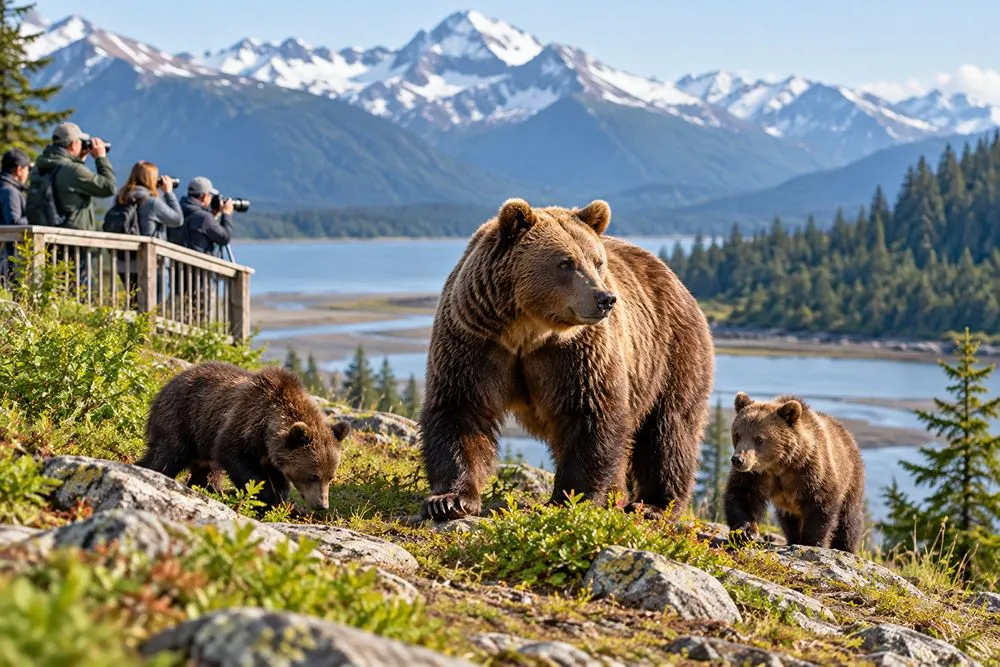
During an Alaska bear viewing vacation, visitors often notice that some bears appear calm around established viewing areas. That can lead to an interesting question: do bears actually recognize the same places and return knowing people may be there?
Bears have strong memories and can become familiar with locations connected to food, travel routes, shelter, and seasonal activity. In established bear viewing Alaska areas, they may also become accustomed to predictable, non-threatening human presence when visitors consistently follow responsible viewing practices.
That does not mean the bears are tame. They remain wild animals whose behavior can change at any time.
Do Bears Remember Specific Places?
They may repeatedly use places where they have previously found:
- salmon
- clams
- berries
- sedges
- safe travel routes
- resting areas
For bears preparing for winter, remembering reliable food sources can be especially valuable.
This is one reason certain areas can attract bears year after year. To understand this seasonal pattern in more detail, readers can explore What Bears Eat and How Salmon Runs Affect Bear Viewing in Alaska?
Do Bears Recognize Bear Viewing Areas?
In well-managed wildlife viewing areas, bears can learn that people generally remain within certain spaces, follow established routes, and do not interfere with feeding.
Over time, some individual bears may show less reaction to people in these familiar settings.
However, familiarity should never be confused with friendliness.
A bear that appears comfortable near people is still a powerful wild animal. Visitors on an Alaska bear viewing tour must continue following the instructions of guides and park staff.
Is This the Same as Habituation?
Habituation occurs when an animal gradually reduces its response to something repeatedly experienced without negative consequences.
For example, bears in frequently visited wildlife viewing locations may learn that groups of people standing quietly at an appropriate distance do not represent an immediate threat.
Responsible habituation can make wildlife observation possible without people continually causing bears to leave important feeding areas.
It does not mean that visitors should approach bears or attempt to interact with them.
For this reason, Respectful Wildlife Viewing in Alaska: Do’s and Don’ts is a particularly useful internal resource for travelers preparing for a tour.
Why Might the Same Bears Be Seen in Familiar Areas?
If an area provides dependable salmon, vegetation, shellfish, or other food, bears have a strong reason to return during the appropriate season.
Some animals may therefore become recognizable to experienced guides who spend significant time in the same region.
Returning mothers may also appear with cubs in areas they have used previously.
This can make Alaskan brown bear tours especially interesting for guides and returning visitors because individual animals may display familiar behaviors from one season to another.
Does Familiarity with People Make Bears Safer?
A bear’s apparent tolerance of people should never be treated as permission to move closer.
Behavior can be influenced by:
- food availability
- other bears nearby
- cubs
- sudden movements
- unexpected sounds
- competition for feeding areas
Even a bear that has passed through the same viewing area many times deserves substantial space.
Visitors should always follow professional guidance. How to Stay Safe While Viewing Bears in Alaska: Top Tips from Experts provides useful background before joining a guided experience.
Can Bears Tell Individual People Apart?
However, visitors should not assume that a bear recognizes individual tourists in the way a domestic animal might recognize its owner.
What matters more for Alaska bear viewing trips is that bears may become familiar with consistent patterns of human activity in established locations.
Predictability helps reduce unnecessary disturbance.
Why Are Established Viewing Practices Important?
Guides typically emphasize keeping appropriate distances, remaining together as a group, avoiding sudden movements, and never interfering with a bear’s access to food or travel routes.
These practices help make human presence more consistent and understandable from the animal’s perspective.
They also allow visitors on bear viewing tours Alaska to observe natural behavior instead of repeatedly causing bears to retreat.
Will Bears Always Return to the Same Viewing Location?
Even when bears are familiar with an area, wildlife sightings are never guaranteed.
Their movements depend on changing natural conditions, including:
- salmon availability
- tides
- vegetation
- weather
- competition from other bears
- seasonal food sources
A location that is highly active one week may be quieter another.
For travelers deciding when to visit, Best Time for Bear Viewing in Alaska: Alaska’s Peak Bear-Viewing Seasons offers useful seasonal context.
What Does This Mean for Visitors?
The goal is not to make bears comfortable with close human interaction. It is to observe them responsibly while minimizing disruption to their normal behavior.
Experienced guides understand local bear activity and know how to position groups while maintaining appropriate boundaries.
Conclusion
That familiarity does not make them domesticated or harmless. Respectful behavior remains essential on every wildlife encounter.
Planning your own Alaska bear viewing vacation? Contact us today to learn more about professionally guided Alaska bear viewing trips and experience Alaska’s brown bears in their natural habitat.