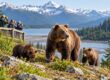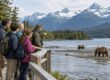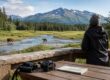
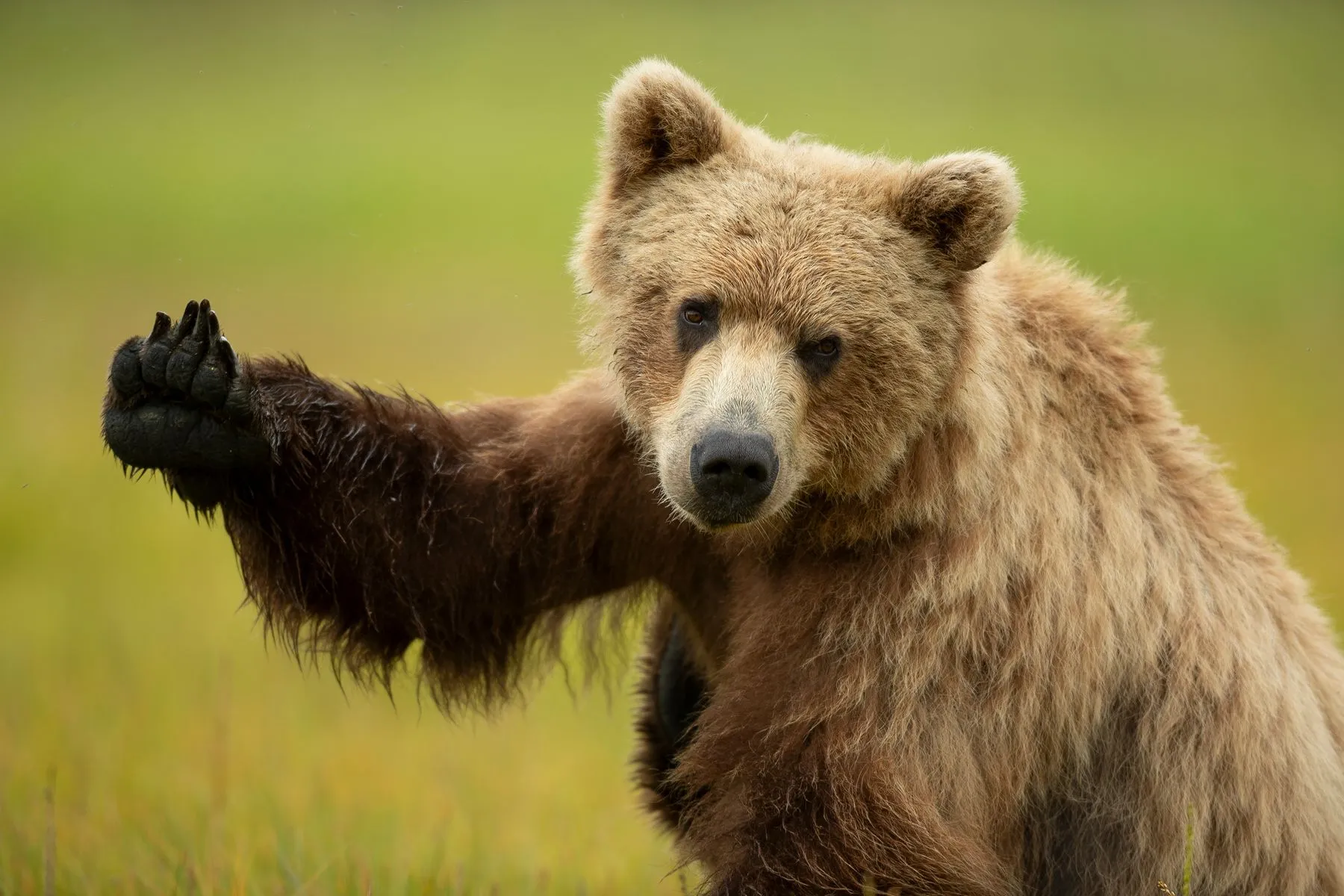
Seeing a bear in the wild is memorable almost anywhere. Alaska, however, offers something different: large expanses of natural habitat where bears can still follow seasonal food sources, move across remote landscapes, and display behaviors that visitors rarely get to observe elsewhere.
That combination of habitat, food, protected land, and experienced wildlife guiding helps explain why bear viewing tours in Alaska attract travelers and photographers from around the world
Alaska Has the Habitat Bears Need to Thrive
The Alaska Department of Fish and Game – Brown and Black Bears notes that brown bears occur across much of the state, while black bears inhabit most of Alaska’s forested regions. Coastal brown bears can occur at particularly high densities where rich food sources are available.
For visitors interested in the animals themselves, our guide to Alaska’s grizzly bears provides more background on their behavior and characteristics.
The Food Creates the Viewing Opportunities
Alaska provides several.
Along coastal areas, bears may graze on protein-rich sedges, search tidal flats for clams, forage for other natural foods, and later concentrate around rivers and streams when salmon become available.
The National Park Service explains that Chinitna Bay, for example, can sometimes have 20 or more coastal brown bears visible from a single location. Its estuary provides seasonal food from spring through fall, including sedges, clams, and salmon.
This connection between diet and visibility is worth understanding before traveling. Our article on what bears eat and how salmon runs affect bear viewing explains how changing food sources influence where bears may be found.
You Can Watch Natural Behavior, Not Just Spot a Bear
Depending on the destination and season, Alaskan brown bears in Alaska may be seen grazing, digging for clams, fishing, traveling along beaches, interacting with other bears, or caring for cubs.
That behavioral variety adds another dimension to bear watching trips in Alaska. Wildlife sightings are never guaranteed, but established viewing areas can give visitors time to watch rather than simply check a bear sighting off a list.
Protected Areas Help Keep the Experience Wild
That matters because wildlife viewing is managed around the needs of wild animals rather than treating bears as an attraction.
Lake Clark National Park and Preserve provides a good example. Its Cook Inlet coast contains rich salt marshes and feeding habitat, while established viewing practices are intended to make human activity more predictable and reduce disturbance to bears.
Visitors interested in this environment can read more about Lake Clark bear viewing directly from the National Park Service.
Remote Access Is Part of What Keeps These Places Special
That remoteness creates logistical challenges, but it also helps preserve the character of the experience.
For travelers considering a bear viewing charter service in Alaska, the journey can become part of the day itself. Coastal routes may provide views of mountains, volcanoes, beaches, marine wildlife, and remote landscapes before visitors even reach the viewing area.
Experienced Guides Add Context to What You Are Seeing
Guides familiar with a particular area can interpret feeding behavior, changing tides, seasonal movements, body language, and local conditions. They can also help groups behave consistently around bears and understand when an animal needs additional space.
This becomes particularly valuable in remote areas where conditions can change quickly. Our article explaining why guided bear viewing tours can improve the wildlife experience explores this in more detail.
Responsible Viewing Is Part of the Experience
For example, Katmai National Park prohibits approaching bears or other large mammals within 50 yards and has additional restrictions around concentrated food sources. At Chinitna Bay in Lake Clark, certain high-use bear habitat is seasonally closed to human entry, and food-related restrictions apply in the viewing area.
Always follow current National Park Service, refuge, state, or other land-management rules for the specific destination, as well as ranger and guide instructions.
Why Alaska Continues to Stand Apart
That means every bear viewing trip in Alaska is shaped by real wildlife conditions rather than a fixed schedule. For travelers who value wild landscapes as much as the sighting itself, that unpredictability is part of what makes the experience remarkable.
If you are planning your own Alaska bear viewing adventure, contact us to learn more about available trips, travel options, and responsible ways to experience bears in their natural habitat.