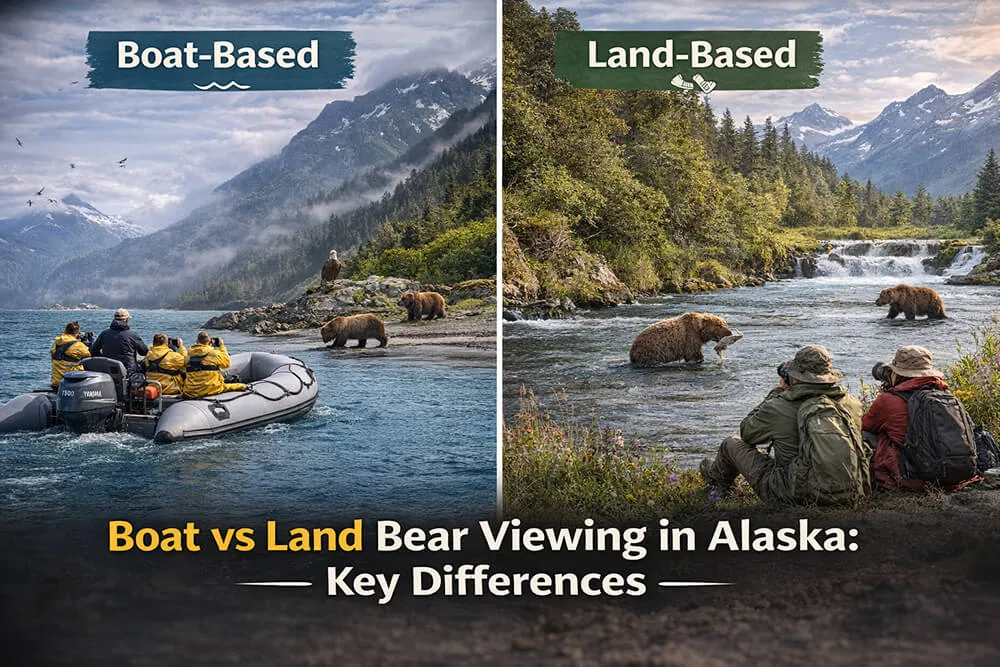
Many visitors planning bear viewing Alaska adventures assume that all wildlife tours work the same way. In reality, the experience can feel very different depending on how you reach the viewing area.
Some tours take visitors deep into coastal habitats by boat, while others involve hiking or flying to land-based viewing sites. Both options can provide incredible wildlife encounters, but boat-based trips offer a perspective that land tours simply cannot replicate.
If you are researching Alaska bear viewing trips, understanding how boat access changes the experience can help you decide which type of trip fits your expectations.
Why Do Some Bear Viewing Tours Use Boats?
Much of Alaska’s prime bear habitat sits along remote coastlines, river mouths, and salmon streams that are difficult to reach by road.
Boat access allows guides to travel through these areas while keeping a respectful distance from wildlife.
This approach offers several advantages:
- Access to isolated shoreline feeding areas
- Quiet observation from offshore
- Ability to move along large stretches of coastline
- Opportunities to observe multiple wildlife species
Many coastal bear viewing areas are located near protected wilderness regions and national park waters, where transportation by boat is often the most practical way to reach prime viewing spots.
You can explore more about key locations in “Lake Clark National Park: Your Next Destination for Bear Viewing”
What Makes Boat-Based Bear Viewing Feel Different?
The main difference is perspective.
Instead of standing on a viewing platform or hiking to a riverbank, visitors observe bears from the water looking toward the shoreline.
This creates a very different wildlife viewing experience.
Common moments on boat-based trips include
- Watching bears dig for clams along tidal flats
- Seeing brown bears walking the coastline
- Observing salmon fishing near river mouths
- Spotting cubs following their mothers along beaches
Because boats can quietly drift or anchor at safe distances, visitors often see bears moving naturally without noticing human presence nearby.
How Close Can Boats Get to Bears?
Responsible operators follow wildlife viewing guidelines designed to protect both visitors and animals.
Federal land managers and wildlife agencies recommend maintaining safe viewing distances, especially when observing Alaskan brown bear tours along coastlines or riverbanks.
Guides typically position vessels far enough away to avoid disturbing the animals while still allowing guests to observe natural behaviors.
Key safety principles include:
- Avoiding sudden boat movements near wildlife
- Keeping noise levels low
- Never approaching bears directly
- Allowing bears to control the interaction distance
These practices support both visitor safety and habitat protection.
For more guidance on safe wildlife observation, see “Respectful Wildlife Viewing in Alaska: Do’s and Don’ts”
Do Boat Tours Offer Better Bear Sightings?
Boat tours do not always guarantee more sightings, but they expand the area guides can cover in a single trip.
Unlike land tours that may focus on a specific river or platform, boats allow guides to move along miles of shoreline.
This mobility can help guides:
- Search for active feeding areas
- Follow salmon runs along coastal rivers
- Adjust viewing locations based on bear movement
Because bears travel large distances while feeding, this flexibility can sometimes improve viewing opportunities during bear viewing Alaska excursions.
How Do Land-Based Bear Viewing Tours Work?
Land tours usually focus on specific viewing areas where bears frequently gather.
These locations may include:
- salmon streams
- waterfalls where fish congregate
- wildlife viewing platforms
- guided walking areas
Visitors typically reach these areas by floatplane, bush plane, or guided hiking routes.
Once there, groups stay within designated viewing areas to minimize wildlife disturbance.
Land tours can provide close observation when bears are actively feeding in one location.
Which Experience Is Better for Photography?
Both options can produce excellent wildlife photographs, but they offer different advantages.
Boat tours
- Wide landscape shots with coastline scenery
- Opportunities to photograph bears walking beaches
- Changing light and scenery throughout the trip
Land tours
- Stable viewing positions
- Close views at salmon streams
- Predictable bear activity in certain locations
Many wildlife photographers choose boat trips when they want variety in landscapes and wildlife behavior.
If photography is a major goal, you may find helpful advice in “Snap the Perfect Shot: Your Guide to Photographing Bears in Alaska.”
Are Boat Tours Safer Than Land Tours?
Both types of tours can be safe when operated by experienced guides.
However, being on the water naturally creates a physical separation between visitors and wildlife, which can reduce certain risks.
Guides also monitor:
- Tide conditions
- Weather changes
- Bear behavior along shorelines
Land tours rely more heavily on visitor awareness and controlled group movement around wildlife.
You can learn more about safety practices in “How to Stay Safe While Viewing Bears in Alaska: Top Tips from Experts.”
What Wildlife Besides Bears Can You See From Boats?
One advantage of coastal bear viewing trips is the variety of wildlife visible from the water.
Guests may also encounter:
- sea otters
- bald eagles
- harbor seals
- whales in some regions
- seabird colonies
This makes boat-based trips appealing to travelers interested in broader wildlife experiences, not just bears.
When Do Boat-Based Bear Tours Work Best?
Coastal bear viewing trips are particularly active during salmon runs, when bears gather along rivers and beaches to feed.
During these periods, guides may observe bears:
- catching salmon near river mouths
- scavenging along tidal flats
- moving between feeding areas
Seasonal timing plays a major role in viewing success. A helpful reference is “Best Time for Bear Viewing in Alaska: Alaska’s Peak Bear-Viewing Seasons.”
Final Thoughts
Choosing between boat-based and land-based tours depends on the type of experience you want.
Boat tours provide mobility, scenic coastal views, and the chance to observe bears in wide natural landscapes. Land tours often focus on concentrated feeding areas where bears gather in predictable locations.
Both approaches offer memorable Alaska bear viewing trips, and each reveals a different side of Alaska’s wildlife.
If you want to learn more about planning a coastal bear viewing trip, explore the options available at: https://bearviewinginalaska.com/