Your first bear viewing in Alaska experience is something you will never forget. Seeing wild bears in their natural habitat is very different from watching wildlife in a zoo or on television.
At the same time, many first-time visitors have questions.
- Will you actually see bears?
- Is it safe?
- What happens during the trip?
This guide walks you through what a typical day looks like, what you should prepare for, and how to get the most out of your first Alaska bear viewing trips.
What Happens During a Bear Viewing Tour?
Most Alaskan brown bear tours follow a structured but flexible format.
Quick overview:
- Travel to a remote viewing location (often by floatplane or boat)
- Safety briefing from your guide
- Guided walk or positioning near a viewing area
- Several hours observing bear behavior
- Return trip the same day or later
Once you arrive, the focus shifts entirely to quiet observation and safety.
If you want a broader look at how tours work, see “Experience the Wild: Top-Rated Bear Viewing Tours in Alaska.”
Will You Definitely See Bears?
No wildlife experience can guarantee sightings, but many bear viewing areas in Alaska are chosen because bears return there regularly.
Why sightings are likely:
- Bears gather around salmon streams during feeding season
- Guides track recent bear activity
- Remote locations reduce human disturbance
Your chances improve significantly if you visit during peak seasons. Learn more in “Best Time for Bear Viewing in Alaska: Alaska’s Peak Bear-Viewing Seasons.”
How Close Do You Get to the Bears?
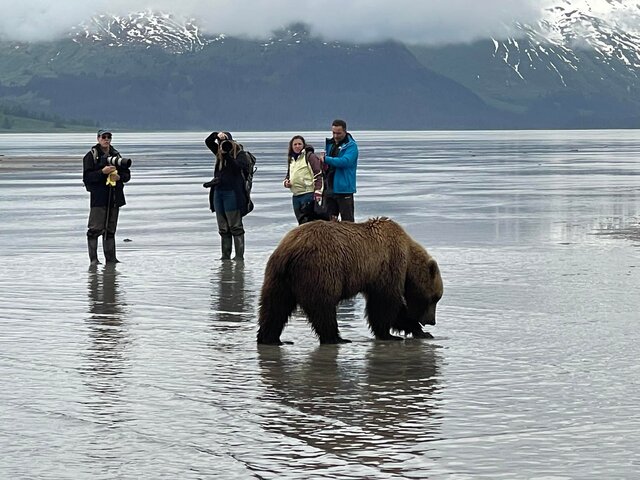
You may be surprised that bear viewing is not about getting as close as possible.
Instead, guides follow strict wildlife practices that prioritize safety and natural behavior.
Typical approach:
- Maintain safe distances from bears
- Let bears move freely without interference
- Position groups where bears are comfortable
In many cases, bears will continue feeding or walking naturally because they do not feel threatened.
Is Bear Viewing Safe for First-Time Visitors?
Yes, when done properly.
Guided tours follow established safety practices used across Alaska’s wildlife areas.
Key safety rules:
- Always stay with your guide
- Avoid sudden movements or loud noises
- Never approach or feed wildlife
- Follow all instructions immediately
Guides are trained to understand bear behavior and react if conditions change.
For more detailed guidance, read “How to Stay Safe While Viewing Bears in Alaska: Top Tips from Experts.”
What Should You Wear and Bring?
Conditions in Alaska can change quickly, even in summer.
Recommended items:
- Waterproof jacket and layered clothing
- Comfortable, sturdy footwear
- Camera or binoculars
- Snacks and water
- Sunglasses and sunscreen
Dressing in layers is especially important because temperatures can vary between locations.
What Kind of Bears Will You See?
Most visitors encounter brown bears (often called grizzlies), especially in coastal regions.
Depending on the location, you may also learn about:
- black bears in forested areas
- differences in size and behavior between species
- feeding patterns tied to salmon runs
To better understand the species, see “Meet Alaska’s Bears: An In-Depth Look at Alaska’s Majestic Creatures.”
What Does a Typical Viewing Moment Feel Like?
This is often the part people remember most.
You might be standing quietly while:
- a bear catches salmon in a stream
- a mother guides her cubs along the shoreline
- multiple bears feed in the same area without conflict
There is usually no rush. Guides allow time for observation, photography, and simply taking in the experience.
Common First-Time Concerns (Quick Answers)
Is it physically demanding?
Most tours involve light walking, but some locations may require uneven terrain.
Are kids allowed?
Many tours allow children, but age limits can vary depending on safety requirements.
What if the weather changes?
Weather can affect travel, especially flights. Flexibility is important.
Do I need wildlife experience?
No. Tours are designed for beginners and first-time visitors.
How Should You Prepare Before Booking?
Before choosing your trip, consider:
- time of year (affects bear activity)
- travel logistics (flight or boat access)
- group size preference
- budget and trip duration
Planning ahead helps ensure your first bear viewing Alaska trip matches your expectations.
You may also find it helpful to read “5 Must-Know Tips for an Unforgettable Bear-Watching Trip in Alaska.”
Final Thoughts
Your first bear viewing experience in Alaska is not just about seeing wildlife. It is about stepping into a natural environment where bears live, feed, and interact freely.
With the right preparation and guidance, even first-time visitors can safely enjoy one of Alaska’s most memorable outdoor experiences.
Thinking about planning your first trip?
Contact us today to learn more and start organizing your Alaska bear viewing trips with confidence.