If Kodiak bears are such powerful and adaptable animals, a common question visitors ask is simple:
Why do they only live in one small part of Alaska?
The answer has less to do with human boundaries and more to do with geography, evolution, and long-term wildlife management. Understanding this helps travelers appreciate why Kodiak bears are so unique and why their habitat remains carefully protected.
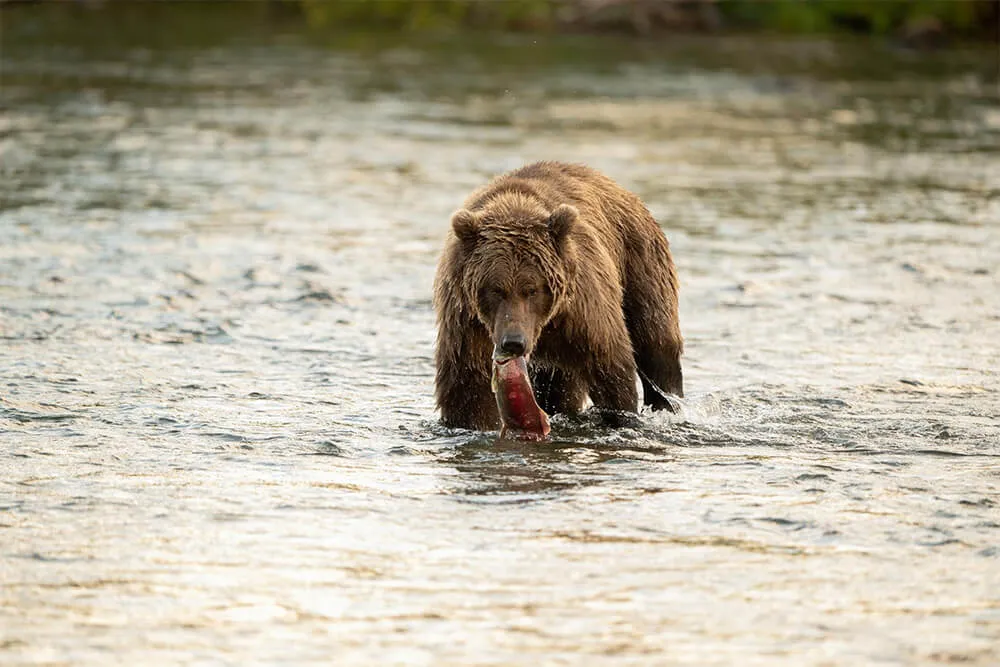
A Natural Island Boundary That Never Opened
Kodiak bears live exclusively in the Kodiak Archipelago, a group of islands off Alaska’s southern coast. These islands have been physically separated from mainland Alaska for roughly 12,000 years, ever since glaciers melted at the end of the last Ice Age.
When sea levels rose, bears already living in the region became isolated on the islands. With no land bridge to cross, Kodiak bears never mixed with mainland brown bear populations again.
This natural isolation is the main reason Kodiak bears only exist in this one region of Alaska.
Isolation Changed Everything Over Time
Because Kodiak bears were cut off from other bear populations, they evolved differently. Over thousands of years, isolation led to:
- Larger average body size
- Denser bone structure
- Less competition with other large predators
- Stable access to rich coastal food sources
This is why Kodiak bears are recognized as a distinct subspecies of brown bear, even though they share common ancestry with grizzlies.
If you are curious how these differences compare in detail, this guide explains it clearly: What is the difference between Kodiak and Grizzly Bear?
A Food Supply That Supports Giants
Another key reason Kodiak bears thrive only here is food availability.
The Kodiak Archipelago offers:
- Large salmon runs
- Nutrient-rich coastal ecosystems
- Minimal seasonal food shortages
With abundant calories year after year, bears grow larger and healthier than most mainland brown bears. This environment is difficult to replicate elsewhere in Alaska, even in areas where brown bears are common.
Alaska Wildlife Management Keeps Them There
Kodiak bears are managed separately from mainland bears under Alaska wildlife regulations. The Alaska Department of Fish and Game treats the Kodiak population as a unique conservation group.
Strict rules govern:
- Hunting permits
- Population monitoring
- Habitat protection
- Human-bear interaction policies
These regulations ensure the population remains stable and confined to its natural range. Kodiak bears are not relocated to other parts of Alaska, as doing so could disrupt ecosystems and reduce genetic integrity.
Why Kodiak Bears Do Not Spread Naturally
People often ask why Kodiak bears never expand beyond the islands on their own.
The answer is simple:
- Bears cannot cross open ocean distances
- No land bridges exist today
- Swimming between islands does not lead to mainland access
Even strong swimmers cannot overcome the geographic barriers separating the archipelago from mainland Alaska.
For visitors still wondering how Kodiak bears relate to grizzlies, this article helps clarify the confusion: Is a Kodiak bear a grizzly bear?
What This Means for Visitors and Travelers
Because Kodiak bears live only in one part of Alaska, seeing them requires planning. This exclusivity is why Kodiak bears Alaska searches are so popular among wildlife travelers.
Visitors interested in Kodiak bears viewing trips or Kodiak bears bear tours often choose guided experiences that respect conservation rules and local safety standards.
Understanding why these bears are limited to one region helps travelers approach viewing with more respect and realistic expectations.
If safety is a concern, this article addresses common questions clearly: Are Kodiak bears friendly to humans in Alaska?
Why Their Limited Range Matters
Kodiak bears are not rare by accident. Their limited range is what makes them:
- Genetically distinct
- Ecologically balanced
- Carefully protected
Keeping them confined to their natural habitat ensures future generations can continue to study, observe, and responsibly experience one of Alaska’s most remarkable wildlife populations.
Conclusion
Kodiak bears only exist in one part of Alaska because nature, geography, and long-term conservation all worked together. Their isolation created something extraordinary, and Alaska’s wildlife policies help preserve it.
If you are interested in learning more about responsible Kodiak bear viewing opportunities, Contact Bear Viewing in Alaska team. Bear Viewing in Alaska offers resources and insights to help you explore these experiences respectfully.