Every autumn, Alaska’s wilderness tells one of its most important survival stories. As winter approaches, brown bears begin an intense feeding phase, and this natural process has inspired a global event known as Fat Bear Week.
What started as an educational initiative has become a worldwide moment of attention for Alaska’s bears, drawing millions of viewers who want to understand how these animals prepare for the harsh months ahead.
What is Fat Bear Week?
Fat Bear Week is an annual online event held in October that highlights how wild brown bears naturally gain weight before hibernation. The event focuses on real bears living freely in Alaska, observed without interference.
Public voting compares bears at their seasonal peak, helping people visually understand what a healthy, well-prepared bear looks like before winter.
Short answer
Fat Bear Week is an educational event that shows how Alaska’s brown bears gain weight naturally to survive winter hibernation.
Why Do Bears Need to Get So Fat?
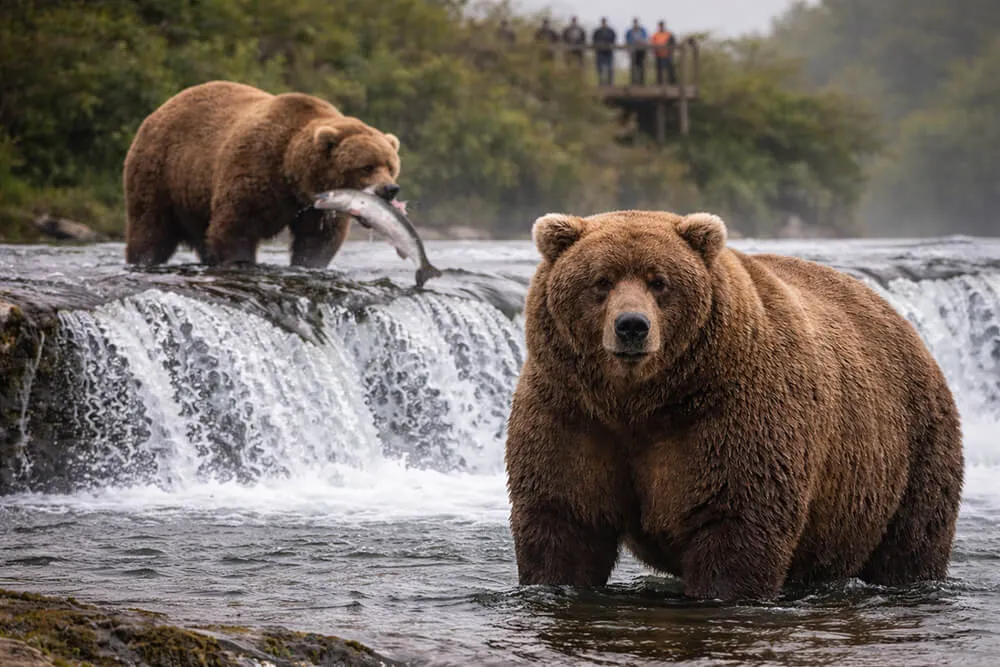
In Alaska, winter survival depends on preparation. Brown bears enter a biological phase known as hyperphagia, during which they eat almost constantly to build fat reserves.
This fat:
- Fuels the body during months of hibernation
- Maintains body temperature
- Supports pregnant females and developing cubs
- Increases survival rates through long winters
Understanding this feeding behaviour often leads visitors to wonder whether these seasonal patterns also affect their chances of seeing bears in the wild. Knowing How Likely is it to See a Bear in Alaska? helps connect bear biology with real-world viewing expectations.
Why Is Fat Bear Week Important for Wildlife Education?
Fat Bear Week changes how people perceive bears. Instead of seeing size as a problem, it explains why weight gain is a sign of health and success in the wild.
The event promotes:
- Respectful wildlife observation
- Awareness of natural bear behaviour
- Understanding of protected ecosystems
- Responsible tourism practices in Alaska
For travellers interested in bear viewing Alaska experiences, this education builds appreciation rather than unrealistic expectations.
Where Does Fat Bear Week Take Place?
Most Fat Bear Week bears are observed at Katmai National Park and Preserve, particularly around Brooks Falls, where salmon runs attract large numbers of brown bears.
While Katmai is one of Alaska’s most recognised bear viewing areas, it represents just one part of a much wider landscape. Learning Where is the best place to see brown bears in Alaska? helps travellers understand how geography, seasons, and access all influence bear sightings across the state.
How Does Public Voting Work?
Fat Bear Week voting follows a simple bracket-style format. Bears are matched against each other, and the public votes based on visible seasonal weight gain.
Important facts:
- Bears are never fed or disturbed
- All footage is captured under strict wildlife rules
- The process is observational, not competitive
- Education and conservation are the primary goals
This approach ensures the event remains ethical and compliant with wildlife protections.
Is Fat Bear Week Safe and Legal in Alaska?
Yes. Fat Bear Week follows all U.S. and Alaska wildlife laws. Bears are observed remotely, and no activity alters their behaviour or habitat.
For visitors planning Alaska bear viewing trips, it is important to remember:
- Approaching or feeding bears is illegal
- Federal and state laws strictly protect wildlife
- Safe distances are mandatory
Anyone hoping to see bears responsibly should understand How to Stay Safe While Viewing Bears in Alaska: Top Tips from Experts, especially when travelling in remote areas.
Why Has Fat Bear Week Gained Global Attention?
Fat Bear Week resonates because it blends storytelling with science. Viewers follow individual bears over time, while learning about ecosystems, salmon runs, and seasonal survival.
Its popularity has also increased interest in Alaskan brown bear tours, as people want to experience these natural behaviours beyond a screen, in ethical and controlled environments.
When Is the Best Time to See Bears Like Those in Fat Bear Week?
The bears featured during Fat Bear Week are at their largest in late summer and early autumn. This period aligns with peak salmon activity and is widely considered one of the strongest seasons for bear viewing Alaska visitors plan around.
Seasonal timing, weather, and location all play a role in successful sightings.
Conclusion: From Online Votes to Real Wildlife Experiences
Fat Bear Week offers a fascinating look at how Alaska’s brown bears prepare for winter, but it is only a glimpse into a much larger natural story. Seeing these animals in the wild, under responsible and respectful conditions, provides deeper understanding and appreciation.
If you are considering guided bear viewing experiences or seasonal trips in Alaska, explore ethical opportunities with Bear Viewing in Alaska.
Learn more at – https://bearviewinginalaska.com/contact/