If you are planning a trip to Alaska or simply curious about its wildlife, one question comes up often:
How long do grizzly bears actually live in the wild?
Grizzly bears are powerful, intelligent animals, but life in Alaska is demanding. Weather, food availability, and human interaction all influence how long a bear survives. Let’s look at what research and long-term monitoring in Alaska tell us.
Average Lifespan of Grizzly Bears in Alaska
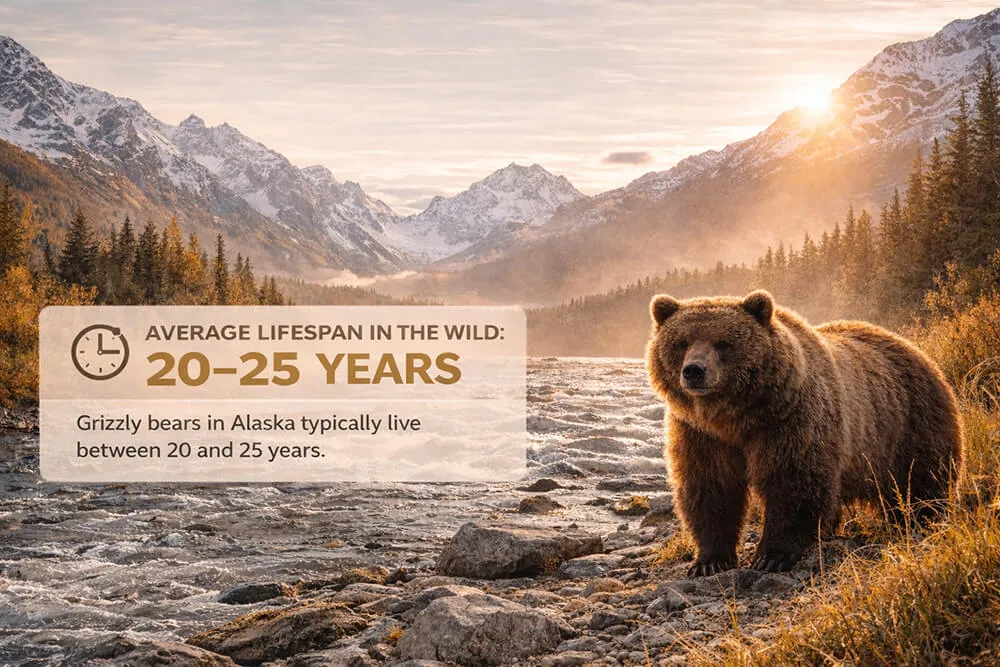
In the wild, grizzly bears in Alaska typically live between 20 and 25 years. Some individuals live longer, but reaching that age is not guaranteed.
Under ideal conditions, a few grizzlies have been documented living into their late 20s, but this is less common. Life expectancy varies widely depending on where the bear lives and the challenges it faces.
Why Some Grizzly Bears Live Longer Than Others
Not all grizzly bears experience the same conditions. In Alaska, lifespan is influenced by several key factors.
Food Availability
Bears living in areas with reliable food sources, such as salmon-rich coastal regions, often maintain better health and higher fat reserves. This improves survival during harsh winters.
Climate and Habitat
Interior Alaska bears face longer, colder winters, which can increase stress and mortality. Coastal bears often experience slightly milder conditions, giving them an advantage.
Human Interaction
Human activity remains one of the biggest risks. Vehicle collisions, defense – related incidents, and legal hunting all affect lifespan, even though Alaska strictly regulates bear management.
Grizzly bears are protected and managed under state law by the Alaska Department of Fish and Game, which monitors populations and sets conservation-focused regulations.
Male vs Female Grizzly Bear Lifespan
Female grizzly bears often live longer than males.
Why?
- Males roam larger territories
- They are more likely to engage in fights with other bears
- They face higher risks during mating season
Females, while raising cubs, tend to stay within familiar areas and avoid unnecessary conflict, improving their chances of long-term survival.
Do Grizzly Bears in Alaska Live Longer Than Kodiak Bears?
This is a common point of confusion.
Kodiak bears and grizzly bears are closely related, but Kodiak bears live in a more isolated, food-rich environment. That difference can affect lifespan.
To better understand how these bears differ overall, these articles provide helpful context: What is the difference Between Kodiak and Grizzly Bear?
The Biggest Threats to Grizzly Bear Longevity
Grizzly bears in Alaska face several natural and human-related challenges.
Natural Risks
- Starvation during poor salmon years
- Injuries from fights with other bears
- Harsh winters that shorten feeding seasons
Human-Related Risks
- Conflicts near roads or settlements
- Defense-of-life incidents
- Legal hunting under regulated seasons
Despite these risks, Alaska still supports the largest grizzly bear population in North America, thanks to careful wildlife management.
What This Means for Visitors Hoping to See Grizzlies
If you’re interested in grizzly bears in Alaska, understanding their lifespan helps explain why sightings can vary year to year. Older, experienced bears often know the best feeding spots and are more visible during active months.
That’s why grizzly bears bear tours in Alaska are carefully planned around peak activity periods.
To set realistic expectations, these resources are helpful: What month are grizzly bears most active?
A Common Misconception About Grizzly Bear Age
Many people assume that size equals age. In reality, a large grizzly bear is not always an old one. Diet, genetics, and location play a much bigger role than age alone.
Some younger bears grow rapidly in food-rich areas, while older bears in tougher environments may appear smaller.
Why Lifespan Matters for Conservation
Understanding how long grizzly bears live helps scientists track population health and plan long-term conservation strategies. Longer lifespans generally indicate stable habitats and successful wildlife management practices.
In Alaska, monitoring bear age helps guide decisions that protect both bears and people.
Conclusion
Understanding how long grizzly bears live in the wild gives valuable insight into Alaska’s ecosystems and the challenges these animals face throughout their lives. Seeing a grizzly bear during its most active years offers a deeper appreciation of just how remarkable these animals are.
If you are considering a trip to Alaska and want to learn more about responsible grizzly bear viewing opportunities, Bear Viewing in Alaska can help guide your planning.
Contact us today to explore viewing options and helpful travel insights.