
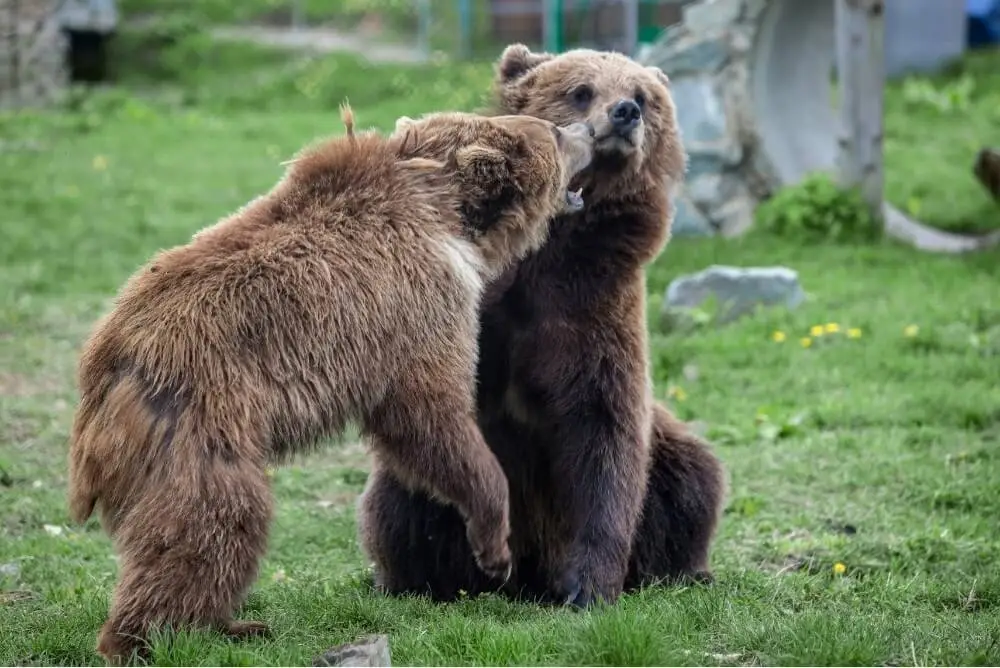
It’s a common question, especially for visitors planning bear viewing in Alaska for the first time. Kodiak bears are often described as calm, massive, and surprisingly tolerant of people. But does that mean they are friendly?
The short answer is no. Kodiak bears are wild animals. Their behavior can appear relaxed in certain situations, but that does not equal friendliness. Understanding the difference is key to safe and responsible Alaskan brown bear viewing.
What Makes Kodiak Bears Seem “Calm” Around People
Kodiak bears live exclusively on the Kodiak Archipelago, where human population density is low and food sources are abundant. These conditions shape how bears behave.
Several factors contribute to their reputation:
- Plentiful food, especially salmon, reduces competition and aggression
- Minimal hunting pressure compared to other regions
- Limited human encounters, which lowers stress responses
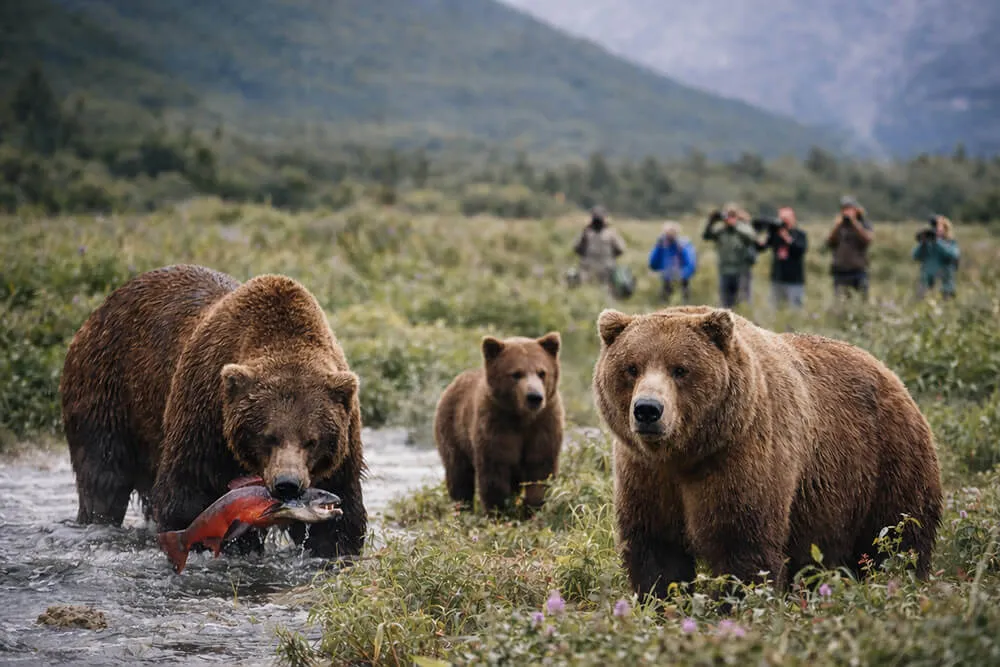
Because of this, Kodiak bears are often seen fishing or moving through meadows without reacting strongly to distant observers. This behavior is sometimes mistaken for friendliness, but it is more accurately described as tolerance.
To understand more about how Kodiak bears compare to other species, including grizzlies, check out What is the Difference Between Kodiak and Grizzly Bear?
Tolerance vs. Trust: An Important Difference
Kodiak bears do not seek human interaction. They tolerate people when:
- They do not feel threatened
- Their cubs are not nearby
- There is enough space to maintain distance
When any of those conditions change, behavior can shift quickly. Bears may bluff charge, vocalize, or retreat. These are defensive reactions, not acts of aggression or friendliness.
This distinction is important for anyone considering Alaskan brown bear tours. Calm behavior should never be interpreted as predictability.
Are Kodiak Bears Dangerous to Humans?
Serious incidents involving Kodiak bears are rare, especially during guided viewing experiences. Alaska law strongly emphasizes wildlife safety and ethical viewing practices, including:
- Maintaining safe distances
- Avoiding food attractants
- Prohibiting harassment or interference with wildlife
Most negative encounters happen when bears are surprised at close range or when people ignore basic safety guidance.
Visitors who understand when bears are most active and how they behave seasonally are far less likely to find themselves in risky situations. If you have not yet read it, Best Time for Bear Viewing in Alaska: Alaska’s Peak Bear-Viewing Seasons explains how timing plays a role in both safety and sightings.
Why Guided Viewing Matters with Kodiak Bears
Kodiak bears are the largest brown bears on Earth. Adult males can weigh over 1,200 pounds. Even a calm bear has the strength to cause serious harm without intending to.
Guided Alaska bear viewing trips focus on:
- Reading bear body language
- Choosing viewing locations with natural escape routes
- Managing group behavior to reduce stress on bears
These practices are why guided experiences have an excellent safety record while still allowing close, respectful observation.
Do Kodiak Bears Ever Recognize Humans?
There is no scientific evidence that Kodiak bears recognize individual humans or develop bonds with them. What looks like familiarity is usually repeated exposure without negative outcomes.
Bears that regularly see people at a distance may react less dramatically, but this does not mean they are comfortable or trusting. Wildlife biologists consistently caution against assuming any level of relationship or emotional connection.
Still wondering about the relationship between these iconic bears? You might find our post helpful on Is a Kodiak Bear a Grizzly Bear?
If you are curious how seasonal behavior affects this tolerance, What Month Are Grizzly Bears Most Active in Alaska? provides helpful insight into how feeding cycles influence bear movement and energy levels.
Conclusion: Respect, Not Friendliness
Kodiak bears are not friendly to humans, but they are not naturally aggressive either. Their calm presence is a result of environment, food availability, and limited human pressure.
The best encounters happen when people respect boundaries, follow Alaska wildlife laws, and observe bears on their terms.
If seeing Kodiak bears in their natural habitat is on your list, plan your experience with Bear Viewing in Alaska and witness these incredible animals safely, ethically, and responsibly. Contact us today.